Practical Guide to Choosing the Right Hose Length for Your Property Size
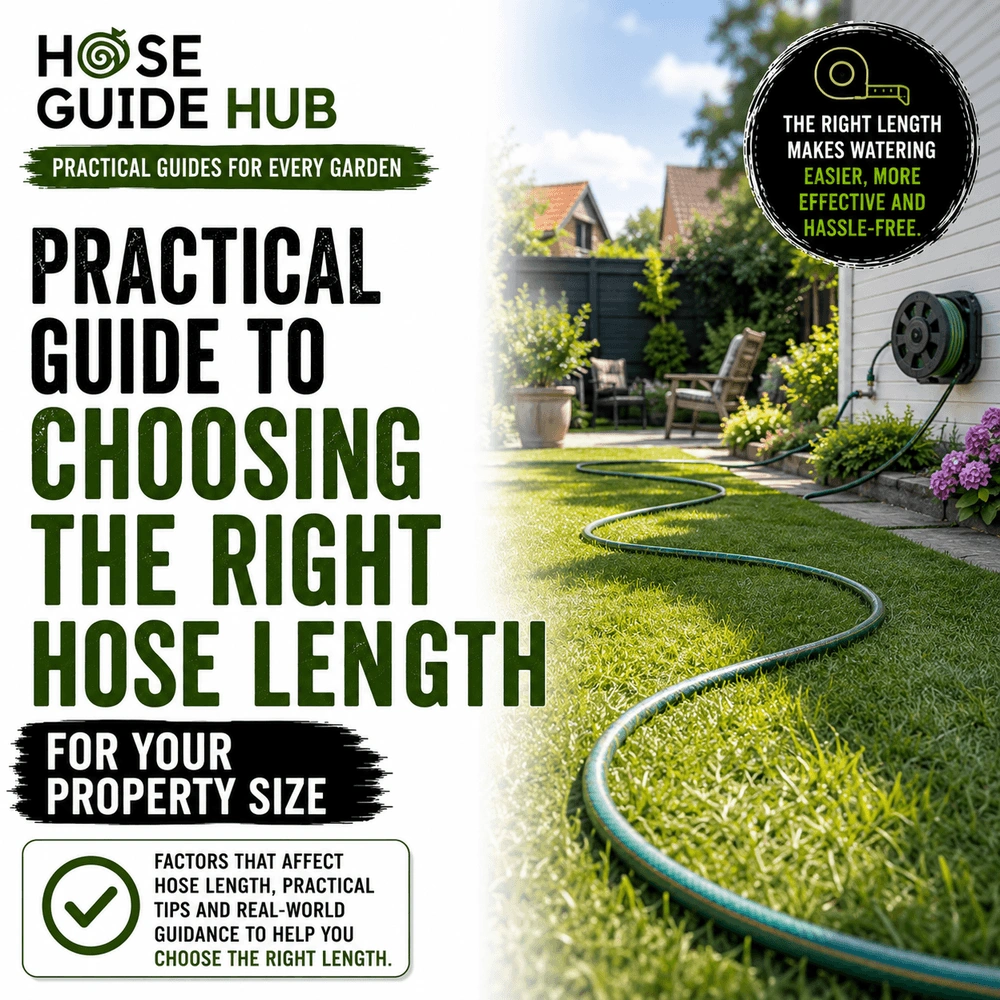
Standing at the spigot with a hose that’s six feet too short is one of the more annoying moments in yard work, right up there with a sprinkler that only reaches half the lawn. Knowing how to choose garden hose length before you buy saves you from that exact situation, and it’s less about grabbing the longest one on the shelf than matching the hose to the actual shape and size of your property. Buy too short and you’re stuck coiling extensions together. Buy too long and you’re dragging dead weight around the yard, watching your water pressure drop along the way. This guide breaks down exactly how to land on the right number.
Disclosure: As an Amazon Associate, we earn from qualifying purchases made through links on this site. Learn more.
Why Hose Length Actually Matters More Than You Think
A hose that’s the wrong length isn’t just an inconvenience, it actively works against you every time you use it. Length affects water pressure, how easily the hose maneuvers around obstacles, and even how long the hose lasts before it kinks or cracks.
Water pressure and length
Every foot of hose adds friction that slows the water moving through it. This is basic physics, not a myth, and it means a 100 foot hose will always deliver less pressure at the nozzle than a 25 foot hose connected to the same spigot, even with identical water source pressure. For most home spigots running at 40 to 60 psi, this drop is barely noticeable under 50 feet. Past 75 feet, especially with a narrow diameter hose, you’ll start to feel it in a weaker spray.
Hose weight and maneuverability
A full length garden hose holds water the entire time it’s in use, and water is heavy. A 100 foot hose filled with water can weigh over 40 pounds, which matters a lot if you’re the one dragging it around raised beds, through gates, or up a slope. Buying more length than you actually need just means hauling extra weight for no reason.
How to Choose Garden Hose Length: Start With Your Actual Measurements
Before you look at a single product listing, walk your property with a tape measure or a long piece of string.
Measure from spigot to farthest point
Start at your outdoor spigot and measure the distance to the farthest spot you’ll regularly need to water, whether that’s the back corner of the vegetable garden, a hanging basket on the far side of the porch, or the car parked at the end of the driveway.
Account for obstacles, not straight lines
A hose doesn’t travel in a straight line. It has to go around the side of the house, past the AC unit, around a flower bed, or through a gate. Measure the actual path the hose will take, not the direct line a bird would fly. This single step is where most people underestimate what they need.
Add a buffer
Once you have your measurement, add another 10 to 15 feet. This gives you room to reach a bit further if your needs change, and it accounts for the fact that hoses lose a small amount of usable length once they’re coiled around a reel or bent around tight corners.
Matching Hose Length to Property Size
If you don’t want to measure anything and just want a starting point, this table covers most common situations.
| Property type | Typical distance to cover | Suggested hose length |
| Small patio, balcony, or townhome lot | Under 20 feet | 25 feet |
| Average suburban yard (quarter acre) | 30 to 40 feet | 50 feet |
| Larger suburban or corner lot | 50 to 65 feet | 75 feet |
| Half acre to full acre property | 70 to 90 feet | 100 feet |
| Rural property, farm, or large estate | 100 feet or more | Multiple hoses or spigots |
One Long Hose vs Multiple Shorter Hoses
This decision matters as much as the length itself, and it’s where a lot of people go wrong by defaulting to “just buy the longest one.”
When one hose makes sense
If your spigot sits roughly in the center of the area you’re watering, or your property is a manageable rectangle, one hose sized to your farthest point works fine and keeps things simple. You connect it once and you’re done.
When splitting up is smarter
Properties with an irregular shape, multiple garden zones on opposite sides of the house, or a spigot in an awkward corner often work better with two medium length hoses instead of one long one, especially if you have more than one outdoor faucet. A 50 foot hose off the front spigot and a 50 foot hose off the back spigot is easier to manage than a single 100 foot hose you’re constantly repositioning.
Diameter Matters As Much As Length
Length gets all the attention, but diameter decides how much water actually makes it to the end of the hose, and the two need to be considered together.
| Diameter | Best for | Flow at longer lengths |
| 1/2 inch | Short hoses under 50 feet, light watering tasks like containers and small beds | Pressure drops noticeably past 50 feet |
| 5/8 inch | Most home use, the standard choice for 50 to 75 foot hoses | Handles moderate length well without major pressure loss |
| 3/4 inch | Long hoses of 75 to 100+ feet, or heavy tasks like filling pools or pressure washing prep | Maintains pressure best over long distances |
If you’re buying a hose longer than 75 feet, sizing up in diameter is worth doing even though the hose will be a little heavier and stiffer to handle.
Common Mistakes People Make Choosing Hose Length
- Buying based on the longest option available instead of the actual distance needed
- Forgetting to measure around obstacles like sheds, AC units, and fences
- Pairing a long hose with a narrow diameter, which tanks water pressure at the far end
- Not accounting for slopes, where dragging a heavy hose uphill is far harder than the flat distance suggests
- Assuming one hose has to cover the entire property when two shorter hoses from separate spigots would be easier to manage
Special Cases
Corner lots and irregular yards
Corner lots often have two street facing sides, which means watering needs stretch in two directions from a single spigot. Measure both directions separately and size the hose to the longer of the two, or consider a splitter if you have one spigot serving both sides.
Multi-level or terraced properties
Sloped or terraced yards add real difficulty that flat distance measurements don’t capture. A hose that’s technically long enough on paper can still be a struggle if it has to be dragged up stairs or a steep incline. Adding a few extra feet of buffer matters more here than on flat ground.
Apartments, balconies, and small patios
Container gardens and balcony setups rarely need more than 15 to 25 feet, and a shorter, lighter hose is genuinely easier to store and use in tight spaces. There’s no benefit to buying long here.
Large rural properties and farms
Trying to cover a large rural property with a single hose almost always backfires. Multiple spigots with medium length hoses, or a dedicated reel mounted on a cart, handle these distances far better than one unwieldy 150 foot hose.
Storage and Handling Considerations for Longer Hoses
The longer the hose, the more it benefits from proper storage. A 75 or 100 foot hose left in a loose pile in the sun degrades faster, kinks more easily, and becomes a tripping hazard. A wall mounted reel or a cart style reel keeps a long hose organized and actually extends its working life, since kinks and sharp bends are one of the main reasons hoses crack at the joints.
Quick Decision Checklist
- Walk the actual path from spigot to farthest watering point, not the straight line distance
- Add 10 to 15 feet of buffer to whatever you measure
- Check whether one hose covers everything, or whether two shorter hoses from separate spigots make more sense
- Size up in diameter if you’re going longer than 75 feet
- Plan for storage before you buy, especially for anything over 50 feet
Common Questions
Does a longer garden hose really lose water pressure?
Yes. It’s a function of friction inside the hose, and it becomes more noticeable the longer and narrower the hose is. A short, wide hose keeps pressure closer to what’s coming out of the spigot than a long, narrow one.
Can I just connect two hoses together instead of buying one long one?
You can, and plenty of people do, but each connection point is a spot where pressure drops and leaks can start. If you frequently need the combined length, a single hose rated for that distance performs more consistently than two hoses linked together.
What’s the best length for an average suburban home?
Fifty feet covers most standard suburban lots comfortably, reaching from a centrally located spigot to the far corners of a typical yard. Larger or oddly shaped lots often do better with 75 feet or a second hose from another spigot.
Do longer hoses need a thicker diameter?
Not strictly, but it helps. A 5/8 inch or 3/4 inch diameter handles pressure loss over distance far better than a 1/2 inch hose once you get past 50 or 75 feet.
See our best hose pot with lid comparison post.