
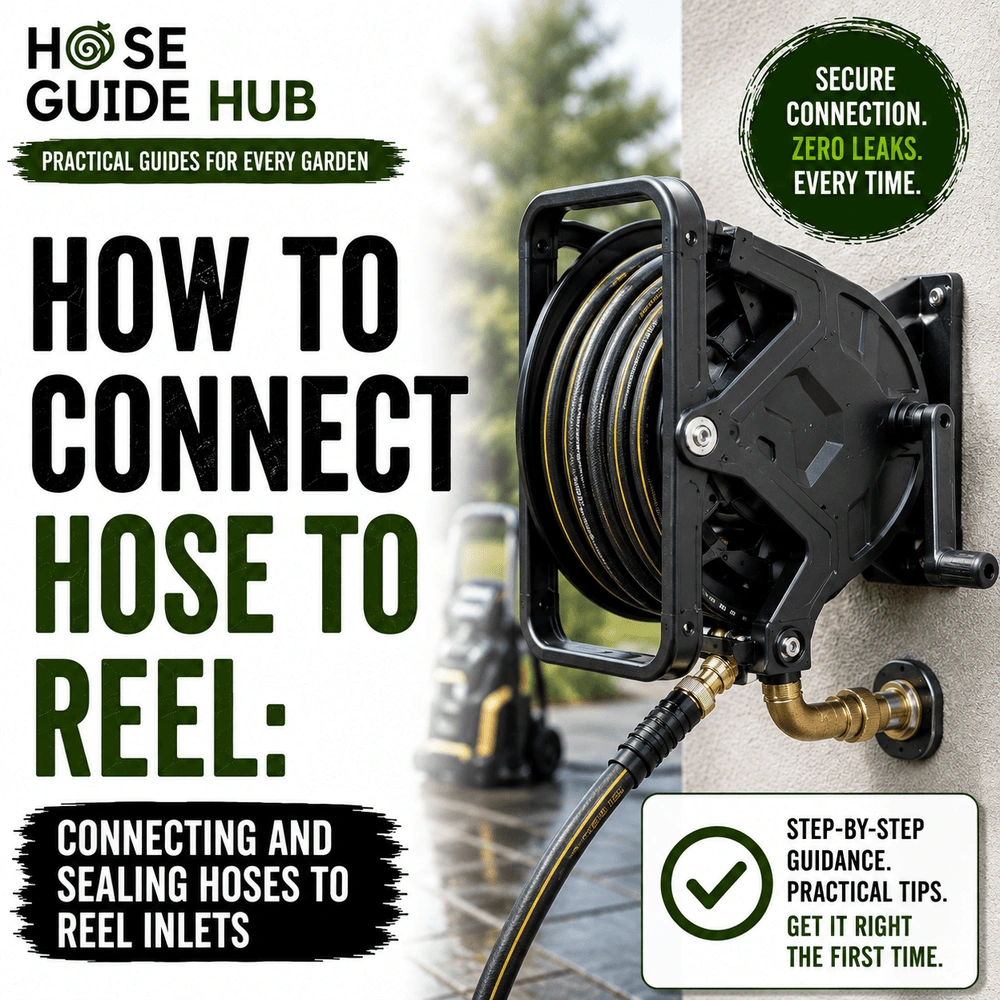
How To Connect Hose To Reel: Connecting And Sealing Hoses To Reel Inlets
A hose reel looks foolproof until the inlet starts weeping under the spigot, and you’re on your knees wondering why a joint that took thirty seconds to install won’t stop dripping. Learning how to connect hose to reel properly comes down to three things: knowing which thread you’re actually dealing with, understanding when tape helps and when it makes things worse, and picking brass or plastic fittings for the right reason instead of just grabbing whatever’s in the hardware aisle. Get those three right and the connection will outlast the hose.
Disclosure: As an Amazon Associate, we earn from qualifying purchases made through links on this site. Learn more.
Why Reel Inlet Leaks Almost Always Come Down to Threads
Most people troubleshoot a leaking reel by tightening harder, buying a new washer, or swapping the whole hose. Half the time none of that fixes anything, because the real issue is a mismatch between two different thread standards meeting at one joint. A hose reel typically has two connection points that matter: the inlet, where the spigot hose feeds water into the reel, and the internal swivel, where the reel’s plumbing meets the coiled hose inside. Each end can use a different thread type, and manufacturers rarely spell that out in the manual. Once you know what you’re looking at, sealing the joint stops being guesswork.
The Three Thread Types You’ll Actually Encounter
Before touching a wrench, figure out which of these three you’re working with. Get this step wrong and no amount of tape will save you.
Garden Hose Thread (GHT)
This is the standard 3/4 inch straight thread found on nearly every outdoor spigot, standard hose, and most reel inlets. It runs 11.5 threads per inch and seals through compression against a rubber or silicone washer sitting inside the female coupling, not through the threads themselves. That washer is doing all the work. Tape on a GHT joint is unnecessary at best and, at worst, holds the washer slightly off its sealing surface and causes the exact leak you’re trying to stop.
National Pipe Thread (NPT)
NPT is a tapered thread, meaning the diameter narrows slightly toward the end, so the fitting wedges tighter the further you turn it. You’ll find this on the brass nipple or elbow that screws into the reel’s internal manifold, and sometimes on the connection between the reel body and its mounting bracket. Because the seal comes from metal-to-metal, or metal-to-plastic, compression along the tapered threads, this is the one place where tape or pipe dope genuinely matters.
Straight Pipe Thread (NPSM)
NPSM shows up occasionally on swivel joints inside the reel drum. Like GHT, it’s a parallel, non-tapered thread that relies on a washer or O-ring rather than thread compression, so tape does little for it. A worn O-ring is almost always the real culprit when this joint leaks.
| Thread Type | Where You’ll Find It | Seals Via | Tape Needed? |
| GHT | Spigot connection, most reel inlets | Rubber or silicone washer | No |
| NPT | Brass fittings inside the reel manifold | Tapered thread compression | Yes |
| NPSM | Internal swivel joints | O-ring or washer | Rarely |
Tools and Materials to Gather Before You Start
- Adjustable wrench or channel-lock pliers
- PTFE thread tape rated for potable water, usually white (don’t grab the yellow gas-rated tape by mistake)
- Pipe joint compound as an alternative to tape on brass NPT fittings
- Spare rubber washers sized for 3/4 inch GHT couplings
- A rag and a small flashlight for inspecting the threads closely
- Silicone-based grease for O-rings (never petroleum jelly, it degrades rubber and some plastics)
- A bucket or towel to catch residual water when you disconnect the old hose
How to Connect a Hose to a Reel Inlet, Step by Step
- Shut off water at the spigot, then open a nearby tap briefly to bleed off pressure in the line.
- Disconnect whatever’s currently attached and inspect both sets of threads under decent light. Look for flattening, corrosion, or a missing washer before you do anything else.
- Pull the female coupling apart and check for the rubber washer. If it’s cracked, flattened, or missing, replace it now. This single step solves more inlet leaks than tape ever will.
- Identify the thread type on the fitting you’re about to seal, using the table above if you’re not sure.
- If it’s NPT, wrap PTFE tape two to four times around the male threads, working clockwise as viewed from the end you’re wrapping, so tightening doesn’t unwind it. Skip this step entirely on GHT and NPSM joints.
- Thread the connection together by hand first. It should turn smoothly with light resistance; if it binds early, you’re cross-threaded and need to back off and restart.
- Once hand-tight, use a wrench for a quarter to half turn more. That’s it. Overtightening is the fastest way to crack a plastic fitting or flatten a washer permanently.
- Turn the water back on slowly and watch the joint under pressure for a minute or two before walking away.
- Check it again after the reel has been used normally for a day. Slow leaks often only show up once the joint has cycled through a few pressure changes.
Thread Tape 101: When to Wrap and When to Skip It
Wrapping Direction Matters
Tape goes on in the same direction you’ll be turning the fitting to tighten it. Hold the fitting with the threads facing you and wrap clockwise. Wrap it backward and the first few turns of tightening will peel the tape off the threads instead of pressing it into them, and you’ll get a leak that seems to come from nowhere.
How Many Wraps Is Enough
Two to four wraps covers most household water fittings. More isn’t better here. Extra layers of tape add bulk that can stop the threads from seating fully, which on a plastic fitting means you’ll be tempted to crank down harder to compensate, and that’s how housings crack.
When Tape Actually Causes Leaks
On any straight thread connection, GHT or NPSM, tape is either useless or actively harmful because it can hold the washer or O-ring proud of its sealing surface. Save it for tapered NPT joints only. If you’ve taped a GHT connection and it’s still leaking, take the tape off entirely and check the washer instead. That’s almost always the fix.
Brass vs Plastic Fittings: Which Belongs on Your Reel
This comes up constantly, and the honest answer depends on how the reel gets used. A reel that lives outdoors year-round, stays connected under pressure, and goes through freeze-thaw cycles wants brass at every joint that touches the water supply. A seasonal reel that gets drained and stored over winter can run on plastic without much trouble, provided nobody’s tightening it with a pipe wrench.
| Factor | Brass | Plastic |
| Corrosion resistance | Excellent, handles hard water and outdoor exposure for years | Doesn’t corrode, but can degrade under UV over time |
| Weight | Heavier, adds strain if oversized on a lightweight reel body | Lighter, easier on the housing it threads into |
| Freeze tolerance | Handles a missed drain-down far better | Prone to cracking if water freezes inside the fitting |
| Thread durability | Holds up to repeated connect and disconnect cycles | Threads wear and strip faster with repeated use |
| Repair cost | Higher upfront, but fittings can often be salvaged and reused | Cheaper individually, but usually replaced rather than repaired |
| Best suited for | Permanent installs, year-round outdoor use, sediment-heavy well water | Seasonal or indoor reels, lower-pressure setups, occasional use |
One thing worth flagging: don’t thread a brass male fitting into a plastic female port and crank it down like you would metal-to-metal. Plastic has more give than brass, and a wrench built for tightening brass will happily strip or crack a plastic reel housing before you feel it start to give.
Common Leak Points and How to Fix Them
| Where It’s Leaking | Likely Cause | Fix |
| Right at the hose-to-inlet joint | Worn, flattened, or missing washer | Replace the washer, skip the tape |
| Where the fitting screws into the reel housing | Under-taped or loose NPT connection | Add two to three wraps of tape and retighten by hand plus a quarter turn |
| Hairline crack near a plastic fitting | Overtightening or too many wraps of tape | Replace the fitting, hand-tighten only, use a wrench for a light final turn |
| Leak that only shows up under full pressure | Cross-threaded connection | Back the fitting off completely and rethread it by hand from scratch |
| Slow drip from the internal swivel | Worn or dry O-ring | Replace the O-ring and coat it lightly with silicone grease |
Keeping the Connection Leak-Free Long Term
- Check the inlet washer once a season, even if nothing’s leaking yet. Rubber degrades from UV and chlorine exposure whether you notice it or not.
- Don’t leave the hose sharply bent right where it meets the inlet. That constant flex loosens the joint faster than the water pressure ever will.
- Drain and disconnect before the first hard freeze if the reel lives outside year-round, even if it’s rated for cold weather.
- Hand-tight plus a partial turn is the ceiling, not the starting point. If you’re leaning on a wrench, something’s already wrong.
- Keep a couple of spare washers and a roll of tape with your garden gear. It’s a two-minute fix if you catch it early, and a much bigger one if you don’t.
- Use silicone grease, not petroleum jelly, on any O-ring you touch. Petroleum-based products break down rubber and some plastics over time.
Frequently Asked Questions
Do I need thread tape on a garden hose connection?
No. Standard garden hose thread seals with a rubber washer, not through thread compression, so tape doesn’t help and can actually hold the washer away from its sealing surface. If a GHT connection is leaking, replace the washer before you reach for tape.
Can I use plumber’s tape on plastic fittings?
Yes, but only on tapered NPT threads, and don’t overdo it. Two to three wraps is enough. Piling on extra tape to compensate for a loose fit usually ends with a cracked housing instead of a tighter seal.
Which lasts longer, brass or plastic reel fittings?
Brass generally wins over time, especially outdoors and through freeze-thaw cycles, because it doesn’t degrade under UV and tolerates repeated tightening far better. A plastic fitting on a seasonal, well-maintained reel can still last for years, so it isn’t a case of one being wrong for every setup.
How tight should a hose reel fitting be?
Hand-tight, then a quarter to half turn with a wrench. If it takes real force to seat the connection, stop and check for cross-threading before you force it any further.
See our Suncast hose reel review.