
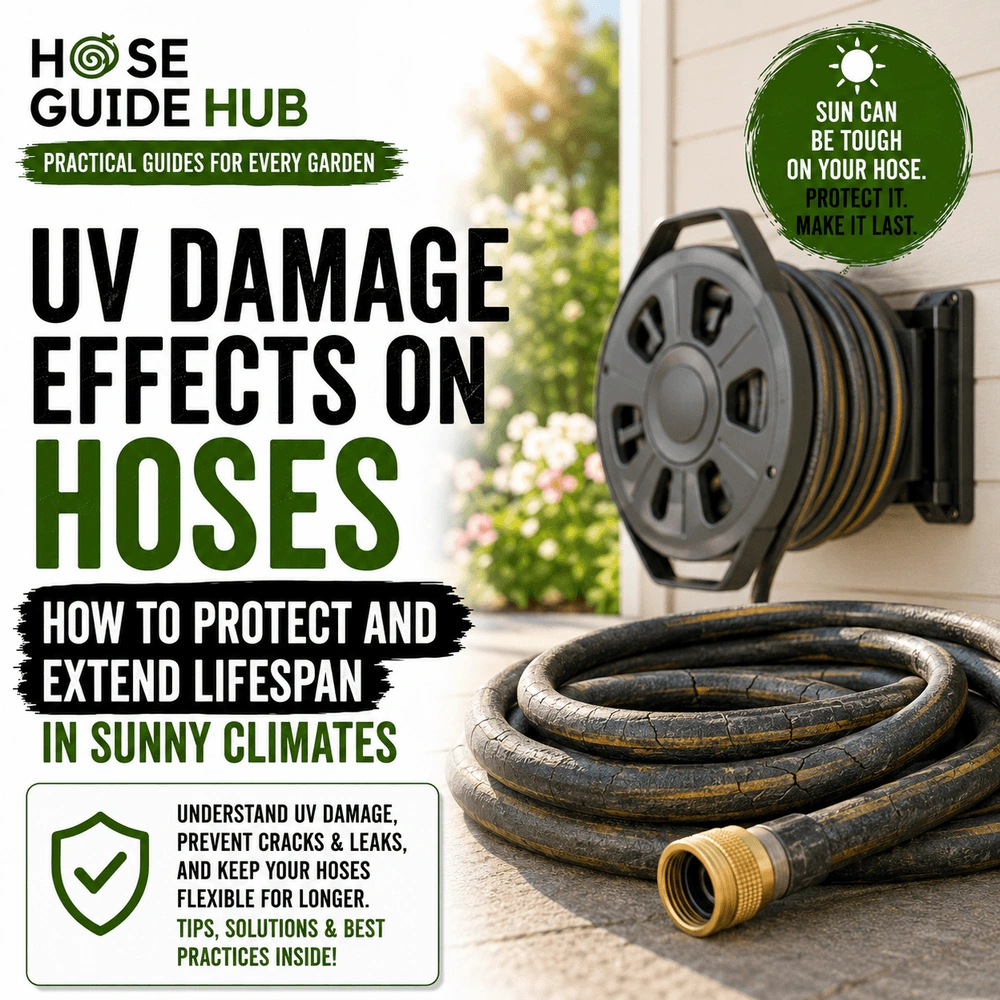
UV Damage Effects on Hoses: How to Protect and Extend Lifespan in Sunny Climates
Leave a garden hose coiled up on the driveway all summer, and by August it’s stiff, cracked, and leaking right where it screws onto the spigot. That’s garden hose left in sun damage doing exactly what it does: cooking the material from the outside in until it can’t hold water without a fight. A hose that should last five or six years can be garbage after a single blazing summer, and almost none of that damage is necessary.
UV radiation doesn’t care what your hose is made of. Rubber, vinyl, polyurethane, or some reinforced hybrid blend, given enough hours under direct sun, every one of them breaks down eventually. The real variable is how long “eventually” takes. For some hoses that’s six months. For others it’s a decade. The gap usually comes down to a handful of habits most people never think about until the hose splits open mid-watering. Here’s what’s actually happening to the hose sitting in your yard right now, and what actually helps.
Disclosure: As an Amazon Associate, we earn from qualifying purchases made through links on this site. Learn more.
What UV Rays Actually Do to a Hose
Garden hoses are polymer chains held together with additives called plasticizers, chemicals mixed in specifically to keep the material soft and pliable. Sunlight carries enough energy in its ultraviolet range to snap those polymer chains apart, a process chemists call photodegradation. Once the chains start breaking, the material can’t hold its structure the way it did on day one.
At the same time, heat speeds up something else: the plasticizers themselves start evaporating faster. That’s the actual reason a hose gets stiff before it gets brittle. The soft, flexible compounds cook off first, and what’s left behind is a shell of the original material that can’t flex the way rubber or vinyl is supposed to.
Then there’s the daily temperature swing. A hose sitting in full sun expands as it heats up during the day and contracts again once the sun drops, over and over, day after day. That constant flexing under stress, combined with material that’s already losing its plasticizers, is what creates the fine cracks you eventually see running around a bend or a coil. Rubber hoses face an extra hit too: ozone in the air reacts with rubber compounds the same way it does with tires left outdoors, a process called weather checking, and it moves faster the more heat and sunlight are involved.
None of this takes long in a genuinely hot climate. A hose that spends its life coiled on hot concrete in direct Arizona or Texas sun can show real damage within a single season.
Signs Your Hose Already Has Sun Damage
Some of this damage is obvious. Some of it hides until the hose fails at the worst possible moment, usually mid-watering with the spigot on full blast. Here’s what to check for:
- Color fading from a deep green or black to a chalky, washed-out version of the original shade
- A powdery residue that rubs off on your hands, a sign the outer layer is breaking down
- New stiffness, the hose resists coiling the way it used to
- Fine cracks circling the hose, especially at bends and near the fittings
- Cracking or crumbling right where the hose screws onto the spigot or nozzle
- Weeping or dripping at the fittings even when everything’s screwed on tight
- Soft bulges that appear under water pressure, a sign the inner wall has weakened
Not Every Hose Material Handles Sun the Same Way
Material matters more than most people assume when buying a hose for a sunny yard. Here’s how the common options actually hold up.
Rubber
Rubber hoses are generally the toughest against heat swings and stay flexible longer than vinyl. Ozone and UV still wear them down over the years through that weather checking process, and eventually the surface goes from smooth to a fine web of cracks, but rubber usually buys the most time before that happens.
Vinyl (PVC)
Vinyl is the lightest and most common option, and it’s usually the basic hose sold in most hardware stores. The plasticizers that keep it soft are also the first thing to cook off in direct heat, which means vinyl stiffens and cracks faster than any other material on this list. A plain vinyl hose left outside year-round in a hot climate can be visibly damaged within a single summer.
Polyurethane
Polyurethane holds up to UV better than either rubber or vinyl and resists cracking for years longer. It’s less common for everyday garden use and shows up more often in drinking-water-safe hoses or ones built for heavy daily use, but where sun exposure is the main concern, it’s the strongest performer of the four.
Reinforced Hybrid
These combine a rubber-vinyl blend with mesh or braided reinforcement inside the wall. They handle UV reasonably well, resist kinking better than plain vinyl, and land somewhere in the middle for both flexibility and sun tolerance.
| Material | UV Resistance | Heat Flexibility | Est. Lifespan in Full Sun | Best For |
| Rubber | High | Stays pliable in heat | 3-7 years | Daily heavy use, hot climates |
| Vinyl (PVC) | Low | Stiffens quickly | 1-2 years | Occasional use, shaded storage |
| Polyurethane | Very high | Stays pliable | 5-10 years | Drinking water, premium daily use |
| Reinforced Hybrid | Moderate to high | Good, kink resistant | 2.5-6 years | General purpose yards |
Ranges assume continuous outdoor exposure without protective storage. Actual lifespan varies with climate, water pressure, and how often the hose is used.
How to Protect a Hose From UV Damage
Get It Out of Direct Sun Between Uses
This single habit does more than anything else on this list. A hose that sits coiled in a garage, shed, or storage box between waterings can last three or four times longer than an identical hose left baking on the lawn. Even parking it in the shadow of a fence or under a deck overnight helps.
Use a UV-Resistant Reel or Storage Box
If leaving the hose outdoors is unavoidable, a reel with a solid, opaque housing blocks direct sunlight even while the hose sits ready to use. Look for a reel or box with some ventilation too, since a fully sealed container in full sun can trap heat and make things worse rather than better.
Match the Material to the Climate
Someone watering a garden in a mild, cloudy region can get away with a basic vinyl hose for years. Someone doing the same in a desert climate probably can’t. In consistently hot, sunny regions, rubber, polyurethane, or a reinforced hybrid is worth the extra weight and stiffness for the added years of service.
Coil It Loosely
Tight coils and forced figure-eights put constant stress on the same few points along the hose. Combine that stress with UV-weakened material and cracks show up exactly where the bends are sharpest. Coiling in wide, loose loops spreads the strain out instead of concentrating it in one spot.
Keep It Off Hot Pavement
Asphalt and concrete radiate heat back up on top of whatever sunlight is already hitting the hose from above. A hose resting flat on a driveway in peak summer can end up sitting in a hotter microclimate than the air temperature alone would suggest. A hook, a reel, or even a patch of grass beats leaving it flat on the concrete.
Apply a UV Protectant Occasionally
Products made for outdoor vinyl and rubber, the same category used on tires and patio furniture, can be wiped onto a hose a few times a season to slow surface degradation. Use them sparingly. Over-applying some formulas leaves a hose slippery to grip or handle.
Habits That Add Years in Hot Climates
- Run water through the hose for a few seconds before use in peak summer, since water sitting inside a dark hose in full sun can reach temperatures hot enough to scald skin or shock plant roots
- Drain the hose fully before coiling it away, since trapped water expands and contracts with heat and adds pressure stress to the walls
- Disconnect the hose from the spigot when it’s not actively in use rather than leaving it under constant water pressure
- Check and replace washers at the fittings periodically, since fittings are usually where cracking shows up first
- Walk the length of the hose once a month during peak summer and look it over for the early warning signs listed earlier
Repair or Replace: Making the Call
Not every crack means the hose is finished. Here’s a rough way to sort it out.
Usually worth repairing: a single crack or leak right at one fitting, one small puncture or nick along an otherwise flexible hose, or a worn washer on a hose body that still feels supple.
Usually time to replace: cracking spread across multiple sections rather than one spot, a chalky or powdery surface running most of the length, several bulges or soft spots under normal water pressure, or stiffness bad enough that the hose won’t hold a coil without kinking.
Quick Reference Checklist
| Habit | Why It Matters |
| Store in shade between uses | Cuts UV exposure to nearly nothing, the single biggest factor |
| Use a UV-resistant reel or box | Blocks sunlight even when the hose stays outdoors |
| Match material to climate | Rubber and polyurethane outlast vinyl in hot, sunny regions |
| Coil loosely, not tightly | Spreads stress instead of concentrating it at sharp bends |
| Keep off hot pavement | Avoids extra radiant heat coming up from asphalt or concrete |
| Drain fully after each use | Prevents internal pressure stress from trapped water |
| Inspect monthly in peak summer | Catches small cracks before they turn into splits |
None of this requires new gear or a different watering routine. It mostly comes down to where the hose sits when nobody’s using it. A shed, a covered reel, or even the shaded side of the house does more for a hose’s lifespan than any coating or premium material ever will on its own.
See our best pressure washer hose reel product guide.